

Spiti Valley in Winter: What It Is Actually Like When the Valley Freezes

Most people who ask about Spiti Valley in winter want to know about the cold.
How cold exactly. Whether they can handle it. Whether it is worth it.
The cold is real and we will cover it honestly. But the thing that stays with people after a winter Spiti trip is not the temperature. It is the running water.
Specifically, the absence of it.
At most guesthouses in Kaza and across the valley in December and January, the pipelines are frozen solid. There is no tap water. No running water in the bathroom. Every morning, local families carry buckets of water on their backs from wherever the nearest unfrozen source is and deliver them to the guesthouses and homes in the village. This is daily life in winter Spiti. It has been daily life here for centuries before pipes existed and it continues now because the pipes freeze anyway.
The first morning our groups discover this, there is always a moment of recalibration. Not panic, not complaint. Just a genuine shift in understanding of where they are and what it means to live here through winter.
That shift is what winter Spiti does. It is not a comfortable trip. It is an honest one.
What the Valley Looks Like in Winter

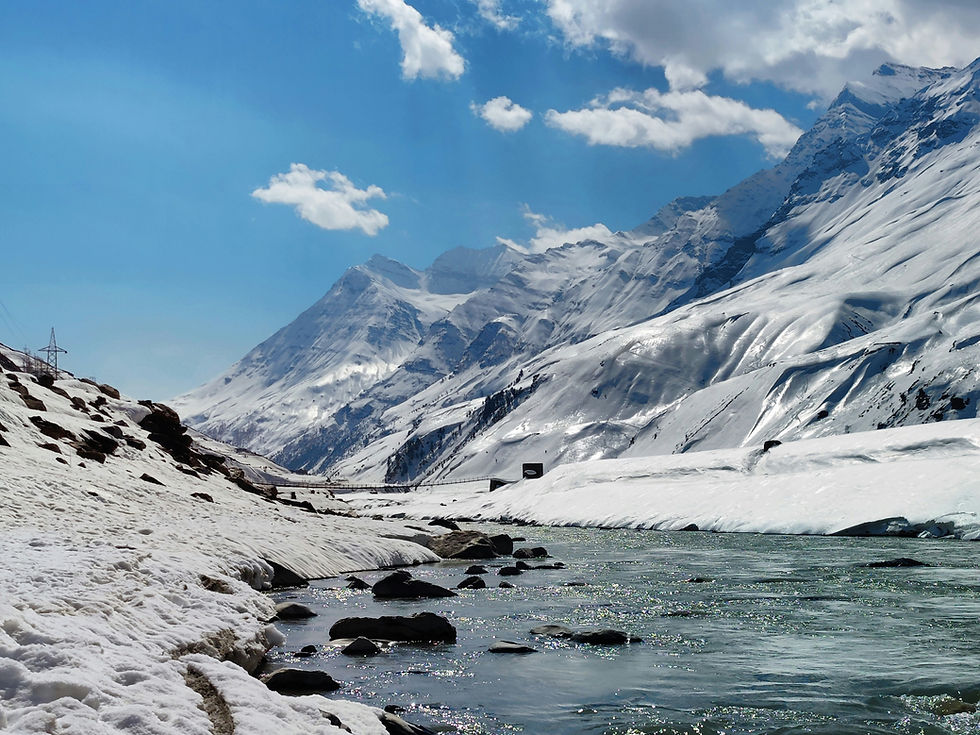
Spiti in summer is brown rock and grey-green river and the particular stark beauty of a high altitude desert. In winter it becomes something else entirely.
The river slows first. Then sections of it freeze, ice forming at the edges and spreading inward through December until the coldest months see the Spiti River locked in stretches that will not move until March. The waterfalls that run freely in summer, modest flows on the cliff faces between Kaza and Tabo, lock mid-fall and stay there. Columns of ice suspended on rock faces, frozen in the act of falling.
The villages go quiet in a way that summer never allows. Some families leave for lower altitudes. The ones who stay are the permanent residents of these high villages, people whose families have lived here through winters like this for generations. Their daily life, the water carrying, the animal tending, the fuel gathering, continues with a deliberateness that the summer months do not require.
The sky in winter is the clearest sky in India. No dust, no moisture, no heat shimmer. Stars at 3,800 metres in January are not the stars you see from a dark-sky site in the plains. They are overhead and immediate and dense in a way that genuinely changes how the night feels.
This is the Narnia version of Spiti. The one that exists only for people willing to be cold.
The Cold: What the Numbers Mean in Practice

Kaza in January averages minus 10 to minus 15 degrees during the day. At night the temperature can drop to minus 20 to minus 25 degrees. At the higher villages like Komic and Kibber, add another 5 to 10 degrees to those numbers.
These are not figures for dramatic effect. This is what thermometers read.
What that means in practice: the water in your bottle freezes overnight if you leave it outside your sleeping bag. Your breath is visible indoors in unheated rooms. Getting out of bed at 3 AM for a bathroom trip requires a level of motivation that most people discover they possess only under duress.
What warms you: the guesthouses that have bukhari heaters running, the evening around a common room fire with the group, the chai that locals make at a strength and sweetness that seems calibrated for exactly this temperature, the physical act of moving through the cold and then coming back indoors.
The cold is not the enemy. Unprepared exposure to the cold is the enemy. The two are different things and the distinction matters.
What the Road In Looks Like

The Manali to Spiti route via Rohtang La is closed in winter. The Shimla to Spiti route via Kinnaur stays open but the driving time is longer and road conditions are variable depending on recent snowfall.
We access Spiti in winter via the Kinnaur route and the drive is part of the experience. The landscape changes from the green of the lower Kinnaur valley to the snow-covered terrain of the upper valley over the course of a single day. By the time you reach Kaza the world outside the vehicle looks completely different from where you started.
Road conditions should be checked before departure. Recent snowfall on the Kinnaur route can affect road surface and timing. Our winter expedition vehicles are suited for these conditions but independent travelers should not attempt this route in standard cars.
What You Can Do in Winter Spiti

Frozen waterfall photography is the winter-specific experience that serious photographers plan entire trips around. The ice formations on the cliff faces between Kaza and Tabo change daily as temperature fluctuates and the shapes that result are unlike anything visible in any other season.
Key Monastery in snow is one of the most photographed things our winter groups bring back. The monastery sits on its ridge above the frozen valley and in full snow it has a weight that summer visits, with their tourist traffic and open cafes, do not quite convey. The monks are present through winter and the prayers in the cold monastery hall have a quality that summer does not match.
Dhankar Monastery and the frozen lake above it is accessible in winter for groups that can manage the altitude and cold. The lake, which in summer is a pleasant 45-minute walk from the monastery, is frozen solid in January and the silence at the frozen lake edge above the winter valley is the kind that makes people stop moving entirely.
Snow leopard tracking is the wildlife experience unique to winter. Snow leopards come lower in the winter months as prey descends to lower elevations. Sightings are never guaranteed but the probability is higher in January and February than any other time of year. The Kibber and Pin Valley areas have the highest concentration of reported sightings.
Stargazing is better in winter than summer. The atmosphere is driest, the sky is clearest, and the cold keeps you sharp and attentive in a way that warm nights do not. Standing outside at 3,800 metres in January looking at the Milky Way is the version of stargazing that most people only read about.
The village and the people are the experience that most winter trip accounts leave out. Spending time in a village where daily life is organized around survival at this temperature, where water is a physical act of labor rather than a tap, where the community functions because it has to and because generations of living here have built the systems for doing it, is something that changes how people think about convenience when they return to Delhi.
The Bucket Water Reality

We mentioned this at the start because it is the detail that most honestly prepares people for winter Spiti.
At most guesthouses in Kaza and the surrounding villages during December and January, running water is not available because the pipes are frozen. Locals carry water in buckets every morning from unfrozen sources to the guesthouses and homes they serve.
You wash with bucket water. You brush your teeth with bucket water. This is not a failure of infrastructure. It is the condition of living at 3,800 metres in winter and it has been this condition for as long as people have lived here.
What this teaches people is not patience, though it teaches patience. What it teaches is the actual cost of comfort in places where comfort is not assumed. A group of young travelers from Delhi who have spent a morning managing their routine with one bucket of water have a relationship with running water for the rest of their lives that no amount of reading about scarcity produces.
This is one of the reasons we believe winter Spiti is valuable in a way that summer Spiti is not. Summer is beautiful and accessible and extraordinary. Winter is honest.
What to Pack for Winter Spiti

Standard cold weather gear at this temperature requires genuine investment, not fashion.
Sleeping bag rated to minus 15 degrees minimum. The guesthouses have blankets but they are not enough on their own. Your sleeping bag is the most important item you pack.
Full thermal set, top and bottom, worn to bed and under everything during the day.
Down jacket, minimum 700 fill power. Not a fashion puffer. A serious down jacket designed for this temperature range.
Windproof outer shell over the down jacket for any time spent outside.
Balaclava, beanie, neck gaiter, liner gloves, outer gloves. All of them. Not some of them.
Hand warmers for the vehicle hours and for anyone who tends to lose feeling in their fingers in the cold.
Lip balm, heavy moisturiser, nasal spray. The dry cold at this altitude cracks everything.
For the full breakdown, read our Spiti Valley packing list with specific winter additions called out by section.
Acclimatisation in Winter

The acclimatisation principles are identical to summer but the cold adds a layer of complexity. Your body is managing both altitude and temperature simultaneously, which increases the physiological demand.
The 48 hour rest rule applies just as strictly in winter. Hydration is if anything more important since the cold suppresses thirst in a way the heat does not. Diamox if your doctor has cleared it. No alcohol in the first 48 hours.
Read our complete Spiti Valley acclimatisation guide for the full route-by-route breakdown.
Who Winter Spiti Is For

Winter Spiti is for experienced travelers who want the version of the trip that tests them. It is for photographers who have specific winter shots in mind. It is for people who find the summer tourist circuit, even in a remote valley, not quite remote enough.
It is not for first-time Himalayan travelers, people with respiratory conditions, or anyone who finds extreme cold genuinely debilitating. It is also not for anyone who would describe bucket water as a dealbreaker.
If you have done summer Spiti and you are wondering what the same valley looks like without the warmth and the other travellers, winter is the answer.
Winter Spiti with Panny Fack India

We run the Spiti Winter Expedition and the Spiti 4x4 Expedition from Delhi every December, January, and February. Expedition-grade vehicles, proper accommodation, and a trip captain who has done this route in winter enough times to know what is coming before it arrives.
For context on how winter compares to summer before you decide, read our Spiti Valley winter vs summer guide.
Browse all our Road Trips or check our Weekend Trips if you are still deciding on a destination.
FAQs: Spiti Valley in Winter

Is Spiti Valley open in winter?
Yes, via the Kinnaur route from Shimla. The Manali to Spiti route via Rohtang La closes by November. The Kinnaur route stays accessible through winter but road conditions depend on recent snowfall.
How cold is Spiti Valley in winter?
Kaza averages minus 10 to minus 15 degrees during the day in January. Nights can drop to minus 20 to minus 25 degrees. Higher villages like Komic are significantly colder.
Is there running water in Spiti in winter?
At most guesthouses, no. The pipelines freeze in December and January. Water is carried by locals in buckets every morning from unfrozen sources. Plan your routine around this.
What is the best time for a winter Spiti trip?
December and January are the peak winter months with the most dramatic frozen landscape. February starts the slow return toward spring. December has shorter days but the most complete winter experience.
Can I see snow leopards in Spiti in winter?
Snow leopard sightings are reported more frequently in winter when they descend to lower elevations. They are never guaranteed. The Kibber and Pin Valley areas have the highest frequency of reported sightings.
Is winter Spiti suitable for first-time Himalayan travelers?
No. The combination of extreme cold, altitude, limited infrastructure, and variable road conditions requires prior high-altitude experience. Summer Spiti is the recommended starting point.
What vehicles are used for winter Spiti trips?
High clearance vehicles suited for snow and ice-covered mountain roads. Standard cars and tempo travellers with snow chains are appropriate for the winter Kinnaur route.
Panny Fack India runs Spiti Winter Expeditions from Delhi every December through February. See the Spiti Winter Expedition or WhatsApp us with your dates.


Comments