

Top 10 Snow Places in India to Visit This Winter: Peak Snowfall Windows, Routes and Ground Realities


When December hits North India, the Himalayas transform overnight.
Across Himachal Pradesh, Uttarakhand, Kashmir, and Arunachal Pradesh, green pine valleys disappear under thick blankets of fresh powder, high mountain passes close under ten feet of snow, and glacial rivers freeze into solid sheets of blue ice.
However, chasing snow in India requires more than just booking a hotel and showing up. Each Himalayan region follows a completely different snowfall calendar, road clearance schedule, and vehicle requirement. Show up too early in December, and you might find dry brown hills; drive a standard hatchback into January snow without chains, and you risk getting stranded on black ice.
Drawing from nine years of leading winter road expeditions and high-altitude treks across the Himalayas, here is our ground-tested breakdown of the top 10 snow places in India to visit this winter, complete with exact snowfall windows, road realities, and practical trip captain tips.
Quick Comparison: Best Snow Places in India to Visit This Winter
Destination | Peak Snowfall Window | Ideal Duration | Road & Terrain Reality | Best Suited For |
Spiti Valley, HP | January to March | 9 Days | Extreme sub-zero (-25°C), Kinnaur route only, high-clearance 4x4 or chained TT | Hardcore road trippers & off-road lovers |
Sethan (Hampta Valley), HP | Mid-Jan to Mid-March | 2 to 3 Days | Steep 12 km hairpin climb from Prini; 4x4 with chains mandatory after snow | Snow igloo stays, snowboarding & quiet views |
Manali & Sissu, HP | Late Dec to February | 3 to 4 Days | Paved highway till Manali; black ice & 4x4 checkpoints toward Atal Tunnel | First-time snow seekers & weekend groups |
Jibhi & Jalori Pass, HP | January to February | 3 Days | Narrow mountain roads; final climb to Jalori Pass often snowbound | Quiet pine stays & short weekend breaks |
Kedarkantha, UK | December to March | 5 Days | Road accessible till Sankri; steep snow-covered summit trail | Beginner to intermediate snow trekkers |
Chopta & Tungnath, UK | January to February | 3 Days | Snow blocks final stretch near Baniyakund; microspikes essential | Weekend snow trekkers & summit views |
Kasol & Tosh, HP | January to February | 3 Days | Driveable till Barshaini; icy foot trails up to Tosh and Kheerganga | Backpackers, cafe hoppers & river stays |
Gulmarg, J&K | Mid-Jan to February | 4 to 5 Days | 4x4 vehicles with snow chains mandatory from Tangmarg to Gulmarg | Powder skiing, snowboarding & cable cars |
Auli, UK | January to February | 4 Days | Winding Badrinath highway; 4x4 or ropeway required from Joshimath | Skiing slopes & Nanda Devi panoramas |
Tawang, Arunachal | January to February | 6 to 7 Days | High-altitude Sela Pass prone to snow delays; ILP permit mandatory | Offbeat Eastern Himalayan explorers |
1. Spiti Valley, Himachal Pradesh (The Sub-Zero Cold Desert Frontier)

If you want raw, unfiltered winter wilderness far away from commercial hill station crowds, Spiti Valley sits in a league of its own. Between January and March, the entire valley turns into an arctic white desert where night temperatures drop to -25°C, waterfalls freeze mid-flow, and ancient monasteries stand surrounded by total silence.
Best Known For:
Crossing snow-packed roads to reach Key Monastery, Dhankar Monastery, and the 1,000-year-old Tabo Monastery.
Driving across Chicham Bridge suspended 1,000 feet above a frozen gorge.
Navigating high-altitude snow trails up to Hikkim (world's highest post office), Komic, and Langza.
Spotting Himalayan Ibex, Blue Sheep, and tracking Snow Leopards around Kibber Wildlife Sanctuary.
Peak Snowfall Window: January to March (deepest snow accumulation and frozen riverbeds).
Road Conditions & Logistics: The northern highway from Manali via Kunzum Pass and Chandratal Lake remains completely closed under heavy snow. The only open route is the in-and-out Hindustan-Tibet Highway via Shimla and Kinnaur. Navigating black ice and unplowed village tracks requires experienced mountain drivers in high-clearance 4x4 SUVs or Tempo Travellers fitted with snow chains.
Trip Captain Tip: Underground water pipes freeze solid below -10°C, meaning guesthouses use traditional dry toilets (Bokshi) and warm bucket water. Read our detailed Winter Spiti Itinerary and Ground Realities Guide before packing.
2. Sethan Valley, Himachal Pradesh (India's Snow Igloo Village)

Tucked high above Manali in the Hampta Valley at roughly 9,000 feet (2,700 m), Sethan is a tiny Buddhist hamlet that has rapidly become one of India's most searched winter destinations. Sitting nearly 2,000 feet higher than Manali town, Sethan holds onto thick snow long after lower slopes melt and is famous for hosting India's original hand-built snow igloo stays.
Best Known For:
Sleeping inside handcrafted real snow igloos outfitted with thick foam mattresses and sub-zero sleeping bags.
Backcountry skiing, snowboarding, tube sliding, and guided snowshoeing across open alpine meadows.
Unobstructed sunset views over the snow-clad Dhauladhar range and stargazing away from town lights.
Peak Snowfall Window: Late December to February for snow; mid-January to mid-March for functional snow igloos (igloos can only be constructed once sufficient snowpack and sub-zero nights settle in).
Road Conditions & Logistics: Sethan lies just 12 to 15 km from Manali via Prini, climbing through 35 steep hairpin bends on the Hampta road. After fresh snowfall, shaded bends glaze over with black ice, and local authorities restrict entry to 4x4 vehicles equipped with snow chains. Two-wheelers and 2WD hatchbacks lose traction rapidly here. An online Hamta Valley entry permit (roughly ₹100 to ₹250) is also required at the checkpost.
Trip Captain Tip: Outside night temperatures drop to -15°C, mobile network fades completely past Prini, and there are no ATMs or fuel stations in the village. Withdraw cash and refuel in Manali before heading up, and confirm directly with your camp that the igloos are physically built before locking your dates.
3. Manali, Solang Valley and Sissu, Himachal Pradesh

Manali remains the most accessible winter playground in North India, offering an easy mix of riverside wooden cafes in Old Manali and heavy snowfields just thirty minutes away in Solang Valley and across the Atal Tunnel in Lahaul.
Best Known For:
Fresh snowfall along the pine forests of Old Manali, Vashisht, and Jagatsukh.
Snow tubing, skiing, and winter paragliding across Solang Valley.
Driving through the Atal Tunnel to witness the frozen Sissu Waterfall in Lahaul Valley.
Peak Snowfall Window: Late December to February.
Road Conditions & Logistics: The four-lane highway from Delhi and Chandigarh to Manali stays open year-round. However, after fresh snowstorms, local administration restricts 2WD vehicles beyond Solang, requiring 4x4 cabs with anti-skid chains to cross into Sissu.
Trip Captain Tip: Traffic toward Solang Valley and the Atal Tunnel bottlenecks heavily after 9:00 AM on winter weekends. Leave Manali by 7:00 AM to beat highway queues and reach fresh snow points first.
4. Jibhi, Jalori Pass and Tirthan Valley, Himachal Pradesh

For travelers who want quiet A-frame wooden homestays, frozen waterfalls, and zero commercial traffic, Jibhi in the Banjar Valley is the ideal three-day winter escape from Delhi NCR.
Best Known For:
Snow-covered cedar forests, riverside wooden cottages, and cozy local cafes.
Trekking across deep snow from Jalori Pass (10,800 ft) to the frozen Serolsar Lake and Raghupur Fort.
Trout fishing spots and quiet riverside walks along the Tirthan River.
Peak Snowfall Window: January to February.
Road Conditions & Logistics: The route via Aut Tunnel and Banjar remains smooth, though shaded corners develop black ice in January. Heavy snowfall routinely blocks vehicular traffic over Jalori Pass, turning the last few kilometers into a scenic snow hike.
Trip Captain Tip: Pack waterproof ankle-high trekking boots with good grip; regular sneakers soak through immediately on the Serolsar Lake snow trail.
Check out our 3-Day Jibhi Winter Weekend Itinerary for exact drive timings.
5. Kedarkantha Trek, Uttarakhand (The Classic Winter Summit)

Located inside the Govind Pashu Vihar National Park in Uttarkashi, Kedarkantha is widely regarded as India's most rewarding beginner-friendly winter snow trek, taking you through dense pine clearings up to a 12,500-foot summit.
Best Known For:
Camping at Juda Ka Talab, a high-altitude lake that freezes completely solid in winter.
A pre-dawn summit push offering 360-degree sunrise views of Swargarohini, Bandarpoonch, and Black Peak.
Walking through knee-deep powder snow under thick oak and pine canopies.
Peak Snowfall Window: Mid-December to March.
Road Conditions & Logistics: The base village of Sankri is accessible by road via Dehradun, Mussoorie, and Purola (roughly 8 to 9 hours of mountain driving). Beyond Sankri, the entire journey is on foot.
Trip Captain Tip: Night temperatures at Kedarkantha base camp drop to -10°C. Always layer with a moisture-wicking thermal base, a fleece mid-layer, and a windproof down jacket rather than relying on one bulky coat.
6. Chopta, Tungnath and Chandrashila, Uttarakhand

Dubbed the Mini Switzerland of Uttarakhand, Chopta transforms from rolling green bugyals (meadows) into a vast white snowfield between January and February, offering one of the best short winter treks in the Garhwal Himalayas.
Best Known For:
Snow trekking up to Tungnath Temple (12,073 ft), the highest Shiva temple in the world.
Pushing onward to the Chandrashila summit (13,123 ft) for face-to-face views of Nanda Devi, Trishul, and Chaukhamba.
Sunrise reflections at nearby Deoriatal Lake.
Peak Snowfall Window: January to February.
Road Conditions & Logistics: Reached via Rishikesh, Rudraprayag, and Ukhimath. During heavy January snowstorms, the road often closes at Baniyakund or Sari village, adding a 3 to 4 km snow walk to reach the Chopta trailhead.
Trip Captain Tip: Packed snow along the stone steps to Tungnath freezes into slick ice by mid-morning. Carry microspikes and trekking poles to avoid slipping on the descent.
7. Kasol, Tosh and Kheerganga, Parvati Valley
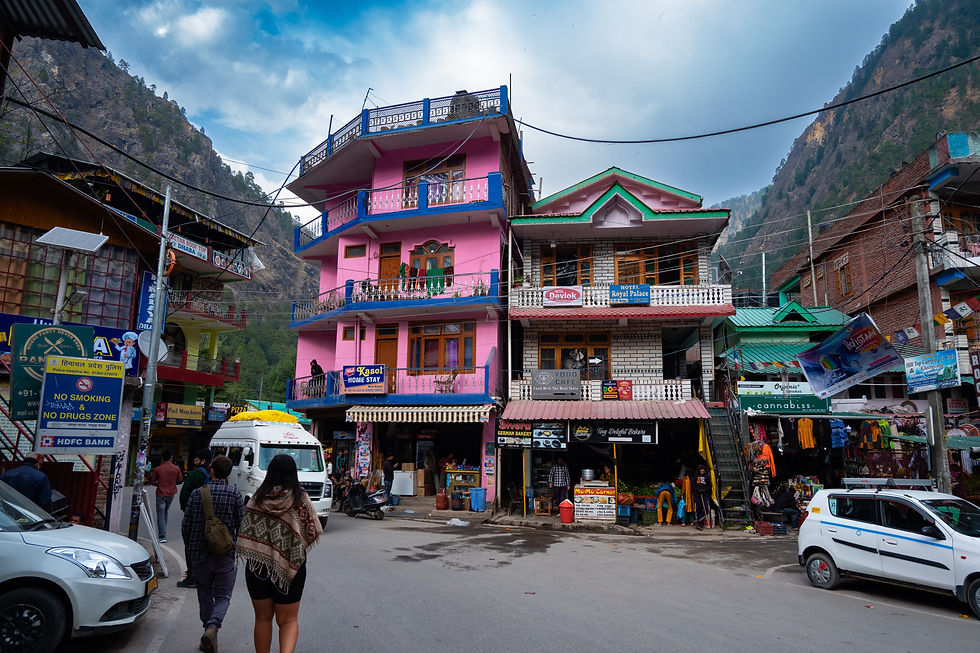
If your idea of a winter trip blends lively mountain cafes, hot Israeli and Himachali food, and snowy village trails, Parvati Valley delivers an unmatched winter vibe without extreme expedition logistics.
Best Known For:
Sipping hot coffee by the roaring Parvati River in Kasol and Chalal.
Climbing up to Tosh village, where wooden homestays overlook massive snow-draped peaks.
Snow trekking through pine forests toward Kheerganga or Grahan village.
Peak Snowfall Window: January to February.
Road Conditions & Logistics: Buses and cars run smoothly from Bhuntar to Kasol and Barshaini. The steep, narrow road from Barshaini up to Tosh frequently freezes over in January, making walking the safest option for the final stretch.
Trip Captain Tip: Many seasonal cafes in upper Tosh and Kheerganga close during peak January snow. Base yourself in Kasol or lower Tosh, and browse our Best Cafes in Kasol Guide for reliable winter spots.
8. Gulmarg and Pahalgam, Jammu and Kashmir

For pure, uninterrupted alpine powder and world-class skiing infrastructure, Gulmarg in the Pir Panjal range remains India's premier winter sports hub.
Best Known For:
Riding the Gulmarg Gondola up to Apharwat Peak at 13,050 feet.
Powder skiing and snowboarding down ungroomed slopes.
Quiet, snow-covered pine valleys and riverside walks in Pahalgam's Aru and Betaab valleys.
Peak Snowfall Window: Mid-January to late February.
Road Conditions & Logistics: Flights operate regularly into Srinagar. From Srinagar, standard 2WD taxis stop at Tangmarg (12 km below Gulmarg), where travelers must transfer into local 4x4 vehicles fitted with snow chains.
Trip Captain Tip: Phase 1 and Phase 2 Gondola tickets sell out weeks in advance during January and February. Book your cable car slots online the moment your flight tickets are locked.
9. Auli and Gorson Bugyal, Uttarakhand

Perched at 9,200 feet in the Garhwal Himalayas, Auli pairs groomed ski slopes with unobstructed views of Nanda Devi, India's second-highest peak.
Best Known For:
Beginner to advanced skiing courses run on open snow slopes.
Snow trekking across Gorson Bugyal, a massive alpine meadow blanketed in deep snow.
Walking around the frozen Auli Artificial Lake.
Peak Snowfall Window: January to February.
Road Conditions & Logistics: Reached via Rishikesh and Joshimath along the Badrinath highway (10 to 11 hours from Haridwar). When heavy snow blocks the 14 km road climb from Joshimath to Auli, travelers take the Auli ropeway or local 4x4 cabs.
Trip Captain Tip: Ski equipment rentals and certified instructors in Joshimath book out quickly over long weekends. Reserve gear early in the morning before heading up the slope.
10. Tawang and Sela Pass, Arunachal Pradesh

For travelers looking beyond the Western Himalayas, Tawang in Arunachal Pradesh offers frozen high-altitude lakes, dramatic mountain passes, and deep Buddhist heritage in the Eastern Himalayas.
Best Known For:
Crossing the snow-covered Sela Pass (13,700 ft) alongside the frozen Sela Lake.
Exploring the 400-year-old Tawang Monastery surrounded by snow-dusted peaks.
Visiting frozen Sangetsar Lake (Madhuri Lake) and PT Tso.
Peak Snowfall Window: January to February.
Road Conditions & Logistics: Reached via Guwahati, Tezpur, and Dirang. All domestic Indian travelers require an Inner Line Permit (ILP) prior to entering Arunachal Pradesh. Heavy snowfall at Sela Pass can temporarily halt convoy movement.
Trip Captain Tip: Always keep one buffer day in Guwahati before your return flight in case snow clearance at Sela Pass delays your descent.
How to Choose the Right Winter Snow Destination
For Extreme Off-Roading & Frozen Deserts: Choose Spiti Valley (ideal for 9-day 4x4 expeditions and sub-zero adventure).
For Snow Igloos & Quick 4x4 Snow Trails: Choose Sethan Valley (12 km above Manali, best paired with a Manali weekend).
For Your First Snow Trek: Choose Kedarkantha (5 days) or Chopta-Tungnath (3 days).
For a Relaxed 3-Day Weekend Break from Delhi: Choose Jibhi-Tirthan Valley or Kasol-Tosh.
For Skiing & Cable Cars: Choose Gulmarg or Auli.
Frequently Asked Questions

Which month has the best snowfall in India?
January and February deliver the heaviest, most consistent snowfall across Himachal Pradesh, Uttarakhand, Kashmir, and Arunachal Pradesh. Early December often sees dry cold at lower elevations, while high passes retain snow well into March.
When are the snow igloos in Sethan Valley open?
Real snow igloos in Sethan are built only after heavy snowfall and sub-zero nights settle in, typically running from mid-January to mid-March. Because opening dates shift with weather each year, always verify that the igloos are physically built before leaving Manali.
Is it safe to drive a personal 2WD car in winter snow?
No. Standard front-wheel-drive hatchbacks and sedans lose traction immediately on black ice and packed snow, especially on steep climbs like Prini to Sethan or Kinnaur to Kaza. Winter mountain routes require high ground clearance, anti-skid snow chains, and experienced hill drivers.
Why do phone and camera batteries drain so fast in the snow?
Sub-zero temperatures slow down the chemical reactions inside lithium-ion batteries, causing phones to shut down abruptly even at 40% charge. Keep phones, power banks, and spare camera batteries inside inner jacket pockets close to body heat.
Do we need special permits for winter destinations?
For Indian citizens, Spiti Valley (via Kinnaur) does not require special permits, though inner line checkpoints log vehicle details. Sethan (Hampta Valley) requires a nominal online barrier permit from Manali, while Tawang in Arunachal Pradesh requires a mandatory Inner Line Permit (ILP) obtained online before arrival.
Join an Upcoming Panny Fack India Winter Departure

Skip the stress of black ice driving, frozen diesel starts, and last-minute hotel cancellations. Travel with our experienced mountain captains and a tight-knit crew of fellow explorers:
Spiti Winter Expedition (9 Days): View Tempo Traveller & Group Batches (Starting at ₹24,000)
Spiti Winter 4x4 Expedition (9 Days): Explore Dedicated 4x4 SUV Convoys
Kedarkantha Snow Trek (5 Days): Check Upcoming Summit Batches
Jibhi & Tirthan Valley Weekend (3 Days): View Friday Night Departures from Delhi
Have Questions on Snow Conditions? WhatsApp our Trip Captains Directly to check live road status and batch availability.


Comments