

Kaza Travel Guide: The Heart of Spiti Valley


Most people arrive in Kaza thinking of it as a stopover, a place to sleep before the real Spiti begins. It is actually the heart of the valley, the one place where everything the circuit has to offer converges.
By the second day, most of them have revised that opinion. Kaza is the largest town in the Spiti circuit and the base for almost everything worth seeing in the valley, but it is also a real place in its own right, with a market, a cafe scene that genuinely surprises first-timers, and a rhythm that rewards slowing down rather than treating it purely as a launchpad.
This Kaza travel guide covers how to reach, where to stay, what the town itself offers, and the day trips out to the high villages that most people actually come here for.
Where Kaza Sits and Why It Matters

Kaza sits at 3,800 metres above sea level on the banks of the Spiti River, roughly at the midpoint of the Spiti circuit whether you enter via Shimla or Manali. This position is exactly why it functions as the base for the region.
Key Monastery, Kibber, Langza, Hikkim, Komic, and the road toward Chandratal all radiate out from Kaza within a day's drive.
The altitude matters too. At 3,800 metres, Kaza is high enough that acclimatisation genuinely matters, but low enough relative to the higher villages around it that spending your first full day here rather than pushing straight to Komic or Kibber makes a real difference to how the rest of your trip feels. Read our Spiti acclimatisation guide for the full breakdown of why Kaza specifically works as the acclimatisation base for the circuit.
How to Reach Kaza

Via Shimla: The gradual acclimatisation route, through Sangla, Kalpa, Nako, and Tabo before reaching Kaza. This is the route we run on our own trips, and the one we recommend for anyone doing Spiti for the first time. Read our Spiti Valley itinerary 9 days for the full day by day breakdown.
Via Manali: The faster but more demanding route, crossing Rohtang La and Kunzum La in quick succession. This gains altitude far more rapidly and carries a higher risk of AMS for first-time travellers.
In summer, both routes are open and Kaza is connected to the outside world from either direction. This changes completely in winter. Once snow closes Rohtang La and Kunzum La, typically by late October, the Manali side shuts down entirely, and Kaza becomes accessible only via the Shimla side through Kinnaur. This single route is the town's only lifeline to the rest of India for the next several months, which our Spiti Winter Expedition is built around for travellers wanting the extreme version of the trip.
Kaza Market

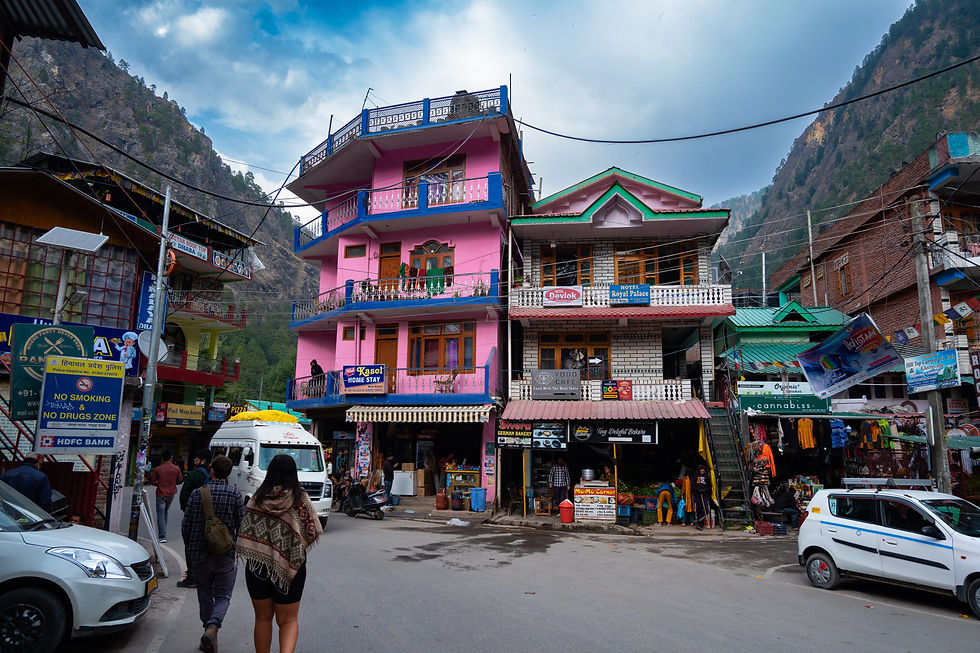
Kaza's market is small by any city standard and genuinely useful by mountain standards. This is your last realistic stop for supplies before heading to the higher villages, and the closest thing the Spiti circuit has to a proper commercial hub.
Local handicrafts, woollens, basic trekking gear, and a scattering of general stores make up most of the market. Kaza also now has a few small supermarts, a relatively recent development that has made stocking up on packaged snacks, toiletries, and basic supplies noticeably easier than it used to be for travellers heading further into the circuit.
It is also where Kaza's cafe scene is concentrated, worth a slow afternoon rather than a rushed walk-through. Read our best cafes in Spiti Valley guide for exactly where to eat and what to order.
Cash, Network, and Practical Realities
Kaza has ATMs, but they are not reliable, and running out of cash without a backup is a genuine risk rather than a minor inconvenience. Withdraw what you can here regardless, since nothing beyond Kaza offers a comparable option.
The good news is that UPI is now widely accepted across most cafes, homestays, and shops in Kaza itself, which has made day to day spending noticeably easier than it used to be. That said, UPI reliability drops fast once you head toward the higher villages, so do not depend on it entirely once you leave town.
Within Kaza itself, most major networks work reasonably well, with Jio consistently the strongest and most reliable of the bunch. The real drop-off happens once you leave town, coverage thins out fast toward the higher villages regardless of which network you are on. A postpaid SIM is essential either way, prepaid does not work reliably anywhere in this region.
Wifi is available at a handful of cafes and homestays in Kaza, though do not expect it to be fast or fully dependable. Read our Spiti Valley packing list for the full connectivity and cash breakdown before you travel.
Where to Stay in Kaza

Kaza has the widest range of accommodation on the entire Spiti circuit, from basic guesthouses to slightly more comfortable homestays with attached bathrooms and reliable hot water. This is the town where most travellers spend the most nights of their trip, given it is the base for so many day trips out.
Given the range of options, book ahead during peak season, June through August, when demand from both independent travellers and group trips is highest.
Day Trips from Kaza

This is the real reason Kaza matters. The town itself is pleasant, but the high villages within reach of it are what most people remember longest.
Key Monastery, 15 km from Kaza, is the largest and most photographed monastery on the circuit. Read our monasteries of Spiti Valley guide for what makes Key worth the early morning visit.
Kibber, at 4,205 metres, is one of the highest villages accessible by road and one of the best zones in India for snow leopard sightings during winter months. Read our snow leopard in Spiti Valley guide if wildlife is part of what draws you here.
Langza, Hikkim, and Komic form the high village trio most groups cover in a single day. Langza is known for its giant Buddha statue and marine fossils from when this valley was underwater. Hikkim has the world's highest post office. Komic, at 4,587 metres, is one of the highest motorable villages on earth.
Chicham Bridge, near Kibber, is Asia's highest suspension bridge and connects Kibber to the once-isolated village of Chicham across a deep gorge. It's a quick stop rather than a destination in itself, but the drop below the bridge is dramatic enough that most people pull over for photos on the way to Kibber.
Chandratal Lake, roughly 115 km from Kaza via Kunzum La, is the destination most people build their entire Spiti trip around. Read our Chandratal lake camping guide for what a night there actually involves, and check the current Chandratal opening date status before planning this leg.
Pin Valley, a separate valley branching off from the main Spiti circuit, is accessible from Kaza and holds a significant portion of the region's snow leopard population within Pin Valley National Park.
The People of Kaza

Kaza's residents are simple, quiet people, and the town's culture reflects that. Loud music, drinking in public, and general partying are not part of how life here operates, and visitors who bring that energy tend to stand out for the wrong reasons.
This matters more than it might seem. Kaza runs on a rhythm shaped by altitude, cold, and a Buddhist culture that values calm over noise. Groups who adjust to that pace, keeping evenings low-key and being mindful of how sound carries in a small mountain town, tend to have a noticeably better relationship with the place and its people than those who do not.
Best Time to Visit Kaza
June to September is peak season, when Kaza is fully operational, all the high villages are accessible, and Chandratal is open. Read our best time to visit Spiti Valley guide for the full month by month breakdown.
December to February is winter, when Kaza turns completely white, snow covering the town, the surrounding hills, and every road in sight, and becomes the base for a very different kind of trip entirely. Frozen waterfalls, minus 20 degree nights, and the best window for snow leopard tracking are all part of this version of the town. Winters here are genuinely harsh, and running water becomes limited to non-existent across most of Kaza as pipelines freeze solid.
Read our Spiti Valley in winter guide for what this version of Kaza actually looks like, including the reality of carried water once the taps stop working.
Planning Your Kaza Trip with Panny Fack India

Kaza is the base for two full days on our Spiti Road Trip, giving groups enough time to properly acclimatise before heading to the higher villages, rather than rushing through in a single night. The Spiti Bike Trip and Spiti Winter Expedition both use Kaza the same way.
Browse all our Road Trips for the full lineup.
FAQs: Kaza Travel Guide

How many days should I spend in Kaza?
At least two full days. One for acclimatisation and exploring the town and market, and at least one for the high village day trip covering Langza, Hikkim, and Komic. Add extra days if Chandratal or Pin Valley are also part of your plan.
Is Kaza the same as Spiti Valley?
No. Kaza is the largest town within Spiti Valley and functions as the region's main base, but Spiti Valley itself is the broader region encompassing dozens of villages, monasteries, and landmarks across the circuit.
Is there an ATM in Kaza?
Yes, the only one on the Spiti circuit, though it is unreliable. Withdraw everything you need for the rest of your trip while in Kaza.
What is the altitude of Kaza?
Approximately 3,800 metres above sea level.
Can I do a Kaza day trip to Chandratal?
Yes, though it is a long day, roughly 115 km each way via Kunzum La. Most itineraries treat Chandratal as an overnight camping stop rather than a same-day round trip from Kaza.
Is Kaza accessible year round?
No. The main Shimla and Manali routes are typically accessible June through October. Outside this window, Kaza is reachable only via the winter route through Kinnaur.
Panny Fack India uses Kaza as the base for our Spiti Road Trip, Bike Trip, and Winter Expedition, with proper acclimatisation time built into every itinerary. See the Spiti Road Trip or WhatsApp us with your dates.


Comments