

What Is Spiti Valley Famous For? The Honest Answer
- Panny Fack

- 1 day ago
- 7 min read

Most answers to this question will mention monasteries, high altitude, remote roads, and Buddhist culture. All of that is true and none of it is the real answer.
The real answer is simpler and harder to explain at the same time.
Spiti Valley is famous for making people feel like they have left the planet.
In summer, the landscape is unlike anything else in India. Bare rock faces in colours that shift between rust, ochre, grey, and brown depending on the time of day and the angle of the light. No trees. No green. No visual reference point that tells you this is the same country you drove out of two days ago. The terrain looks like photographs from Mars, and that is not a figure of speech. Scientists have studied Spiti's geology specifically because the landscape is one of the closest terrestrial analogues to the Martian surface.
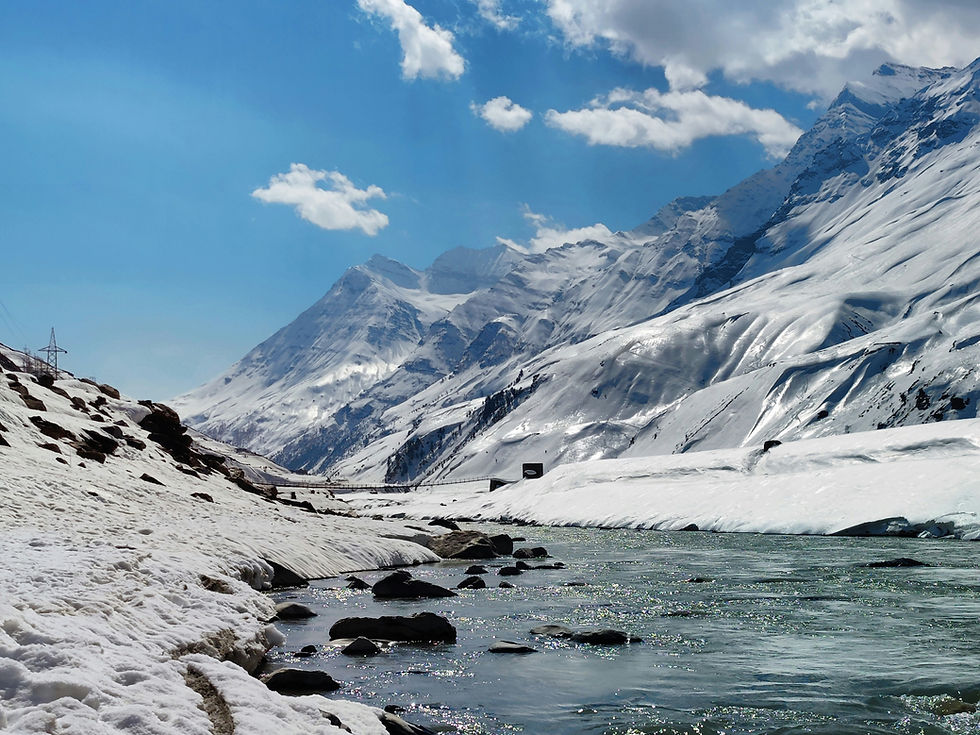
In winter, the same valley becomes Narnia. Snow covers the rock. Waterfalls freeze mid-fall on cliff faces and stay locked there until March. The river slows, then stops in sections. The villages go quiet. And the sky, with no dust or moisture or light pollution, turns into something so dense with stars that people stand outside at minus 15 degrees because going indoors feels like a waste.
That is what Spiti Valley is famous for. Not one thing. Two completely different versions of the same place, both extreme, both worth traveling for.
The Landscape: Why It Looks Like Another Planet

Spiti sits in the rain shadow of the Himalayas, which means the monsoon clouds that drench the rest of India lose most of their moisture before they reach the valley. The result is a cold desert at 3,800 metres above sea level that receives less annual rainfall than some parts of the Thar Desert.
No rainfall means no vegetation. No vegetation means the rock is exposed in its raw form, shaped only by wind and the freeze-thaw cycles of extreme altitude. What remains is one of the most stark and visually arresting landscapes on earth.
The geology of Spiti is also exceptional in its own right. The valley floor was once the bed of a prehistoric sea. The evidence is embedded in the rock faces along the route, marine fossils including ammonites at 4,000 metres, creatures that lived in an ocean that existed before the Himalayas pushed the land upward. Traveling through Spiti is, in a literal sense, traveling through deep time.
This combination of geological drama, extreme altitude, and near-total absence of human modification is why Spiti is famous in a way that more accessible Himalayan destinations are not. It is not famous for being beautiful in a conventional sense. It is famous for being extreme.
The Passes: What Spiti Is Famous for Among Travelers

Spiti is accessed through some of the highest motorable passes in the world and this is a significant part of its fame among road trippers and adventure travelers.
Kunzum La at 4,590 metres is the pass that connects the Lahaul Valley to Spiti and is one of the most dramatic high-altitude drives in India. The road at the pass is a narrow gravel track with the valley dropping away on both sides and the silence of extreme altitude pressing in from all directions.
Rohtang La at 3,978 metres on the Manali side is the more famous pass but also the more crowded one. The approaches from the Spiti side are where the landscape becomes genuinely otherworldly.
Shinku La at 5,091 metres on the alternative Manali entry is higher than both and sits above the snow line for much of the year.
These passes are not just access points. They are part of what makes Spiti what it is. The difficulty of reaching the valley has preserved its character in a way that easier destinations have lost.
Read our Spiti Valley itinerary 9 days for how we navigate these passes on the full circuit.
The Monasteries: Ancient Structures in Extreme Terrain

Spiti is famous for its Buddhist monasteries and the fame is deserved, though not for the reasons most travel guides give.
The monasteries are not famous primarily for their architecture or their art, though both are remarkable. They are famous because of where they are. Key Monastery clings to a ridge above the Spiti River at 4,166 metres. Dhankar Monastery sits on a cliff above the confluence of the Pin and Spiti Rivers in a position that looks structurally impossible. Tabo Monastery, founded in 996 AD, has survived in one of the most remote valleys in India for over a thousand years.
The question the monasteries ask is not "how were these built" but "why here." The answer is the same one the landscape gives: because the remoteness and the difficulty and the silence of this valley is not an obstacle to contemplation. It is the point.
Read our monasteries of Spiti Valley guide for what each one actually gives you.
Chandratal Lake: What Spiti Is Most Famous for on Social Media
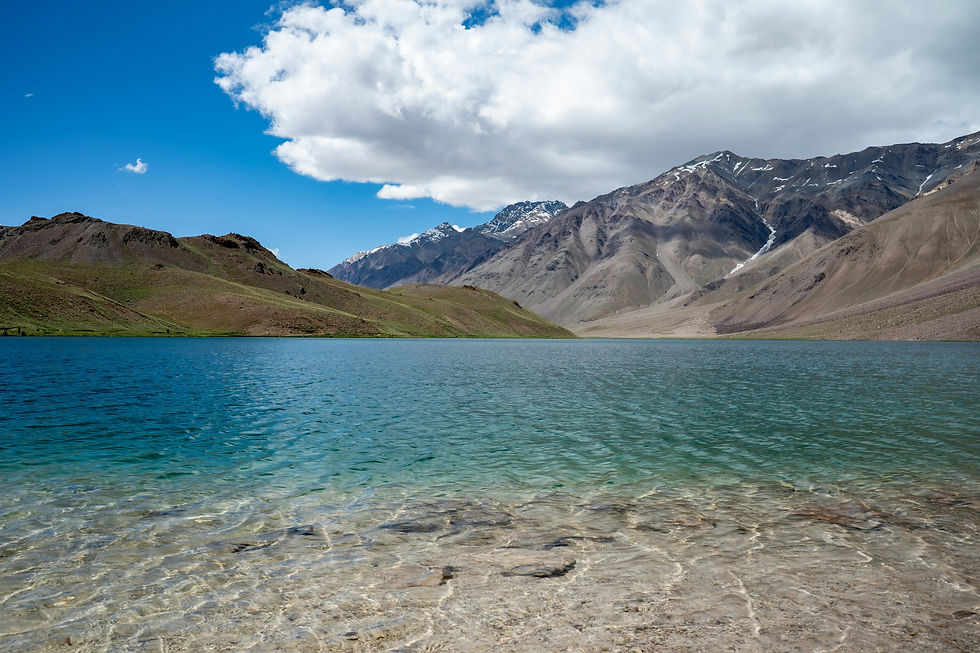
If there is one image that represents Spiti Valley across Instagram and travel content, it is Chandratal Lake at night with the Milky Way reflected in the water.
Chandratal sits at 4,300 metres in the high grasslands above the circuit and is only accessible from mid-June when Kunzum La clears until early October when the passes begin closing. The lake changes colour through the day, from steel blue at sunrise to turquoise by mid-morning to something closer to emerald in the right afternoon light.
At night, with no artificial light within hours in any direction, the sky above Chandratal is the densest starfield most people in India will ever see. The Milky Way is not a faint smear here.
It is overhead and immediate and so detailed that it is possible to navigate by it.
This is the image that makes Spiti famous online and it is one of the genuinely accurate ones. The lake at night is exactly as extraordinary as it looks. Read our Chandratal lake camping guide for what a night there actually involves.
The Wildlife: Snow Leopards and the Ghost Cat

Spiti Valley is one of the best places in India to look for the snow leopard and this is increasingly part of its fame among wildlife photographers and serious nature travelers.
The snow leopard is called the ghost cat for good reason. It is one of the most elusive large predators on earth and the Kibber area of Spiti is one of the most consistent sighting zones in the country during the winter months.
January and February are when prey animals descend to lower elevations and the snow leopard follows, making sightings a realistic if never guaranteed possibility.
The Villages: The Highest Inhabited Places on Earth

Spiti is famous for its high altitude villages and the superlatives around them are real.
Komic at 4,587 metres is one of the highest motorable villages in the world. It has a functioning monastery, a handful of guesthouses, and permanent residents who have lived at this altitude for generations.
Hikkim at 4,400 metres has the world's highest post office, a genuine functional post office from which you can mail letters and postcards with a postmark that has made it a pilgrimage destination for travelers who collect unusual stamps.
Langza at 4,400 metres is known for the giant Buddha statue that sits above the village with the snow peaks behind it, and for the marine fossils embedded in the hillside that date to when this valley was an ocean floor.
These villages are not tourist attractions that have been created around their records. They are functioning communities that happen to hold records because people have been living here at altitude for longer than most other permanent settlements on earth.
Visiting Spiti Valley with Panny Fack India

We run the full Spiti circuit from Delhi every season in tempo travellers and SUVs, via the Shimla entry route that gives your body time to acclimatise before the altitude demands kick in. The passes, the monasteries, Chandratal, the high villages, the garlic soup in Kaza, all of it is on the route.
Browse our Spiti Road Trip and Spiti Bike Trip for summer, and our Spiti Winter Expedition for the Narnia version.
Browse all our Road Trips or check our Weekend Trips if you are comparing destinations.
FAQs: What Is Spiti Valley Famous For

What is Spiti Valley most famous for?
Spiti Valley is most famous for its surreal high altitude landscape that looks like another planet in summer and Narnia in winter. The stark cold desert terrain, ancient Buddhist monasteries, Chandratal Lake, and its status as one of the most remote inhabited valleys in India all contribute to its fame.
Why does Spiti Valley look like Mars?
Spiti sits in the rain shadow of the Himalayas and receives very little annual rainfall. Without vegetation, the rock is exposed in its raw geological form creating a landscape of bare peaks, rust and ochre coloured rock, and a cold desert that closely resembles photographs of the Martian surface. Scientists have studied Spiti specifically as a terrestrial analogue for Mars.
Is Spiti Valley famous for monasteries?
Yes. Key, Dhankar, Tabo, and Komic monasteries are all significant Buddhist heritage sites. Tabo, founded in 996 AD, is considered the Ajanta of the Himalayas for its ancient frescoes. The monasteries are famous not just for their art and architecture but for their extraordinary locations in one of the most remote valleys in India.
Is Spiti Valley good for wildlife?
Yes, particularly in winter. Spiti is one of the best places in India to look for the snow leopard. The Kibber area is the primary sighting zone. Bharal, ibex, Himalayan wolf, and marmots are also found in the valley.
What is Chandratal Lake famous for in Spiti?
Chandratal is famous for its colour changing water, its crescent shape, and its night sky. The lake at 4,300 metres has no artificial light within hours in any direction making it one of the best stargazing locations in India. The Milky Way reflecting on the lake surface is one of the most iconic images in Indian travel photography.
Is Spiti Valley worth visiting?
Yes, for the right traveler. Spiti is worth visiting if you want a landscape unlike anywhere else in India, genuine remoteness, ancient monasteries with living communities, and the experience of being somewhere that has not been designed for ease. It is not the right destination for first-time mountain travelers or anyone who needs reliable infrastructure.
Panny Fack India has run over 273 Spiti expeditions from Delhi. See the Spiti Road Trip or WhatsApp us with your dates.


Comments